

Intertextuality and pop camp identity politics in Finland:
The Crash's music video 'Still Alive'[1]
John Richardson
Research Fellow, University of Jyväskylä, Finland
The Crash are one of the emerging bands in Finland to have achieved local success, with styles that diverge in important respects from those of precursors. Recognizably a part of the domestic pop/rock scene, their music draws on a convergence of influences that seem designed to attract allegiances across existing boundaries. The focus of the article is a single music video, 'Still Alive' (2003), which is interpreted within a framework that includes earlier videos by the same creative team and draws on ideas from recent music research, media studies, and queer theory. In reference to the performances discussed here, the notion of camp is a key concept. In many ways, the Crash's audio-visual performances, directed by Tommi Pietiläinen, demarcate the passage of a pop camp sensibility from the periphery to the centre of the Finnish musical scene.
Camp aesthetics has not had the same impact on Finnish audiovisual culture as in Britain, for instance, where it has been a dominant force in pop performances for several decades. While it is beyond the scope of this article to reflect in any depth on the reasons for this apparent absence, it is aspects of Finnish agrarian culture (Finn: agraari- or talonpoikaiskulttuuri), with its core symbolic values of asceticism, candour, stamina and physical toughness (Löfström 1999, 259-60), that can be regarded as conflicting with camp as it has come to be construed in other cultural contexts, including an emphasis on aestheticism, irony, and theatricality (Babuscio 1999, 119-26). The transition in Finland from preindustrial rural society to industrial urban society was exceptionally late when compared to other European nation states, with as much as seventy percent of the economically active population earning a living off the land as recently as 1930 (Löfström 1998, 3). This and the relative absence in the Nordic countries of large urban centres with visible and active gay subcultures has left its mark on sexual minorities, which have tended towards assimilation rather than separatism (Löfström 1998, 9). What, then, are the implications of this for camp aesthetics in a Finnish context? It seems reasonable to assume that an aesthetic disposition that thrives on the recognition of codes within socially differentiated gay communities (Dyer 1999, 111) would not play so great a part in communities that are more assimilated. Add to this the conflict in symbolic values suggested above and some explanation for the absence of camp in Finland would seem to have been found. This situation is changing rapidly as urbanisation has taken place at an accelerated rate in recent decades and an influx of international influences has precipitated a situation in which assimilation in all facets of life is not the only option and a new plurality of codes and practices pervades.
These cultural transformations may well account for the proliferation of camp. The naïve camp (Sontag 1999, 58-59) of the television soap "salkkarit" (Salatut elämät-Engl. Secret Lives) and retro-camp of 1960s Finnish design such as Marimekko may well be recognised principally at the cultural margins but it is debatable how long this will remain the case. In Finland, as in other countries, there is strong evidence of the annexing of a distinctly queer sensibility by an increasingly urbane and media savvy younger population that possesses all of the requisite cultural capital to negotiate a path through a diversity of cultural codes, including those formerly regarded as the property of sexual minorities. On this question, I align my writing with the constructionist view that camp constitutes a "queer discursive architecture" (Cleto 1999, 35) which "can't be tamed into homosexual property" (33). Nevertheless, the evidence presented here supports the contention that uses of camp in popular and postmodernist articulations retain a significant "queering" function, whose residue of gayness makes entirely depoliticised reception unlikely (34). It may not be entirely accidental, then, that the instances of pop camp discussed here coincided with a period of unprecedented exposure of homosexuality in Finnish audiovisual culture, including the DIY reality show 'Unelmakämppä' (Engl. Dream Apartment), which has featured two gay couples, the first of which (Antti and Jukka) were winners of the first series; and the Finnish adaptation of 'Queer Eye for the Straight Guy' ('Sillä silmällä - homomiesten vinkit heteroille'). Admittedly, liberal reforms with respect to sexual minorities have been more slowly implemented in Finland than other Nordic countries (Löfström 1998, 8). And there has long been a tendency to project perceived pejorative homosexual qualities onto members of minority groups as well as citizens of other nation states, particularly Sweden, rather than to recognise real sexual otherness at home (Löfström 1999). Furthermore, gay celebrities in Finland remain, with very few exceptions, encased in "glass closets" (Sedgwick 1994, 80; Juvonen 2002); those working at the most visible end of the entertainment industry, who rely on mainstream acceptance across generations in order to pursue their careers, would seem, in particular, to benefit from the ambiguity of the "open secret". So a great degree of caution is warranted when it comes to drawing conclusions concerning this new visibility.
Threads on internet chat groups, such as those run by the Finnish sexual equality and human rights group SETA, indicate a shift in attitudes, although it is noteworthy that other chat groups representing more mainstream points of view feature threads that imply the reverse: that the new visibility of "sexual deviancy" in audiovisual culture might have precipitated a homophobic backlash (Joko homo-/lesboparit; Realismia kotikadulle?; Seksuaalinen poikkeavuus in). This knot of contradictory evidence will remain for others to untangle. What is evident from the above is that significant transformations are taking place both in the status of homosexuals in Finnish society and in discursive formations conventionally associated with gay subculture.
The central argument of this paper is that the changes in discursive practices outlined above extend to recent artistic practices in Finnish popular culture. The Crash's music videos represent some of the most visible and audible articulations of this tendency, and as such they can be understood as a distillation of a tangible revisionist force. This article hopes to shed new light on emerging constructions of identity in Finnish popular music and audiovisual culture, while aligning itself to a growing body of research that addresses issues relating to music and gender through the epistemological lens of queer theory (Barkin, Hamessley and Boretz 1999; Brett, Wood and Thomas 1994; Case, Brett and Foster 1995; Gill 1995; Hawkins 2001; Koestenbaum 1994; Smith 1995; Solie 1993; Whiteley 1997). A central concern of this body of work is to destabilise binary gender formations, which from the perspectives of Others have been found to be oppressive. Methodologically, this study draws from an eclectic palette of techniques and materials, including audiovisual analysis, an interview with music video director Tommi Pietiläinen, attendance of live performances, and contributions to internet chat sites. While the main focus of my approach is not ethnographic, a hermeneutic "web of significance"-resembling those referred to in anthropological studies (Geertz 1973, 5; Titon 2003)-has undoubtedly informed my analysis.
The Crash - background
Formerly known as Ladies and Gentleman and later the Crush, the band now known as the Crash released their debut album, Comfort Deluxe, in 1999. Based in the seaport and former capital of Turku, their early style was characterised by an Anglophilia that embraced influences from "shoegazing" guitar bands, synthpop and britpop. Musical characteristics include sweeping melancholic melodies, jangly guitars, lush string arrangements that invoke Phil Spector's "wall of sound", upbeat poppy rhythms, analogue synthesizer riffs, and an airy, highly stylised mode of vocal delivery. On recent recordings, their style has broadened to include disco and 1970s classic rock and soul. The first album achieved only modest commercial success but in subsequent years punctuated by two further albums, Wildlife (2002) and Melodrama (2003), as well as the compilation album The Crash: Selected Songs: 1999-2005 (2005), the band built up a small but dedicated following in countries like Germany, Austria, Sweden, Denmark, Poland, Britain and the US-in addition to their native Finland. In a domestic climate that is more conducive than in the past to bands with international aspirations-as evidenced by the success of Bomfunk MC's, HIM, Kwan, Nightwish, and The Rasmus-the Crash's popularity has continued to grow, due in no small measure to their collaborations with video director Tommi Pietiläinen. Four videos directed by Pietiläinen ('Sugared' [1999], 'Lauren Caught My Eye' [2001], 'Star' [2002], and 'Still Alive' [2003]) have won a string of awards and received generous airplay on channels like MTV Nordic and the Finnish music channel the Voice. Described on the band's official website as a hybrid of the Darkness and the Scissor Sisters, their highly theatrical mode of "cock pop," as the website calls it (Cheetham 2005), undeniably taps into something camped up and exuberant, which has found an echo in the responses of audiences. The term "cock pop" is undoubtedly derived from "cock rock". The precise origins of the latter are unclear, but it is likely that it was found in vernacular discourse before its adoption by Frith and McRobbie in their influential essay "Music and Sexuality" (Frith and McRobbie 1990, 374-75). Here the term denotes blatant phallic posturing associated with rock in which "performance is an explicit, crude, and often aggressive expression of male sexuality" (74). This concept has been heavily critiqued in music research, notably by Middleton (1990, 259-60) and Fast (2001, 162-63), who question the extent to which it accurately represents the realities of rock production and consumption. In cases where a band's performance constitutes a deliberate send up of phallic posturing in rock, however, such as the Darkness, it is difficult to see any grounds for objection. Moreover, in the case of the Crash, the term is found on a website endorsed by the band. Such characterisations are relevant when it comes to charting discursive constructions of the band to the extent that official sources inform reception. For this reason terms such as "cock rock" and "cock pop" will form an integral part of the analysis from here on.
Summing up the band's distinctly postmodernist approach to materials, singer and songwriter Teemu Brunila comments:
It's all about combining influences and tastes, so what we are doing is repeating the echoes that have come our way since childhood. It is something essential to understand in popular aesthetics that art is nowadays mostly about recycling ideas and reflecting them back from a place that makes the ideas appear to be new. (Quoted in Cheetham 2005)
This concise statement of aesthetic intent, composed-somewhat surprisingly-by someone who bemoans the tendency in contemporary society to overanalyse, encapsulates the Crash's distinctive approach. Ample evidence of this is found in the their music videos, the success of which stems from an aesthetic confluence between musicians and director that is nowhere more evident than in the music video 'Still Alive'. Concerning collaborative work on this video, Brunila recalls, "I remember Tommi, who makes all our videos, calling and saying that he wanted to make a film that combined 'Hill Street Blues' with 'Flashdance'. I just said 'Tommi, with that idea you can't go wrong'."
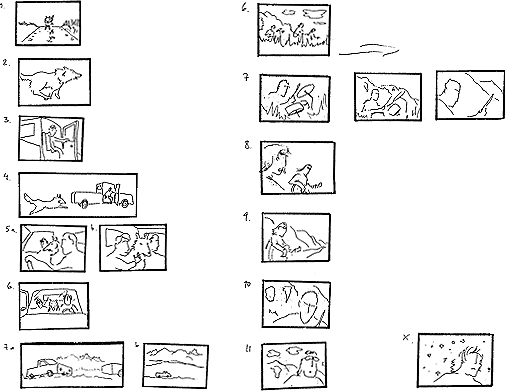
Figure 1: Extracts from Storyboard for the Music Video "Star"
(Courtesy of Tommy Pietiläinen / Woodpecker Productions)
'Still Alive' was not the first Crash/Pietiläinen collaboration that alluded to the past in order to pass wry or mischievous commentary on the present. The promotional video for 'Star' (2002) placed its canine protagonist (a collie) in the cultural milieu of post-World War II rural North America in a storyline that closely mimics those of the classic Lassie movies. The timeless innocence of the video combined with its hammed up romantic cinematography form an apt complement to the self-conscious naivety of the Clash's music. Ostensibly set in rural North America, the solitude and idyll of country life depicted in the video, as well as the appearance and demeanour of some of its characters, are likely to strike a chord with Nordic audiences, for whom the rural continues to occupy centre-stage in depictions of national consciousness. Indeed, this doubleness between domestic and external influences formed an important subtext in Pietiläinen's conception of the video, which is as much characterised by allusions to Swedish children's films as to the more obvious transatlantic touchstones.
What interested me there was also the Swedish writer Astrid Lindgren. Her series Children of the Archipelago (Finn: Saariston Lapset) influenced me. I didn't want to make it look like America. I was interested in a certain kind of innocence. Because I always thought that the story takes place before Kennedy was shot. That was my idea. It became an Americana kind of thing and I would have wanted more of the feel from Swedish children's movies. That was how I was thinking about it, and when I listen to Teemu's voice when he sings, it sounds very innocent. (Pietiläinen 2005)
This impression of innocence-incongruous perhaps in the present-day world but somehow difficult to relinquish altogether-is one of kernels offered up in the audiovisual performances discussed here. It is also conspicuous in Finnish singer-songwriter Maija Vilkkumaa's songs, like 'Ingalsin Laura' and 'Ei Saa Surrettaa', which requisition unfashionably wholesome characters from Little House on the Prairie and Anne of Green Gables, in order to signify temporally and spatially marked distance with respect to the songs' Finnish protagonists. In both Brunila's and Vilkkumaa's songs, allusions outside the immediate cultural sphere do not exclude the possibility of decidedly domestic takes on subject matter. On the contrary, both draw their sap from an understated yet clearly articulated sense of domestication, in which what matters most is not "inherent meaning" but the sense made of included materials in local interpretative contexts. This is the case in the Crash and Pietiläinen's video 'Lauren Caught My Eye' (2001), where a boy falls for the shop assistant in a local record store. The Beach Boys' Pet Sounds becomes the musical backdrop to his fantasies, but his encounter with the surf sound is domesticated through fantasy sequences that are synchronised with the choruses of the song, in which the boy is transported from the rural (read: Nordic) setting of verses to an idyllic beach resembling those evoked in the Californian band's songs. All the while, the lustre and lilt of Brunila's Francophone vocals (French being "the language of love") eggs the boy protagonist on. What matters here is not what the Beach Boys' music means, but what it means to him in light of his first romantic attachment and the immediate cultural milieu. In this setting, allusions to Americana do not produce a sense of Americophilia that excludes the local, no more than Heikki Salo's lyrics to the Miljoonasade song 'Lapsuuden sankarille' (Engl. childhood hero) with its chorus "fly Yuri Gagarin" ("Lennä Juri Gagarin"; according to Salo, a highly politicised statement against "Americanisation" in the 1980s), imply a Russophilia that eclipses national identity. Rather, both instances speak volumes about life in Finland at their time of creation and the shared life experience of performers and their audiences. Identity formations thus considered draw from a palette of affiliations, both domestic and domesticated, which provide the raw materials for subjective positioning within the musical encounter and beyond.
It may be apparent by now that the performances played out in the Crash's music videos are done so at the boundaries of official identities: of national identity and, equally, of normative models of gender and sexuality. Nowhere is this more apparent than in the video of 'Sugared' (1999), in which a group of tennis-playing bourgeois youth parses off into same-sexed pairs in the locker-room following a half-hearted match umpired phlegmatically by Brunila. The ensuing tastefully edited hanky-panky is interspersed with shots of the band performing under showers in Lacoste tennis whites (see Figure 2). Near the end of the video a headshot of the Crash singer cuts abruptly to a shot of a man's shorts falling in front of another man, while Brunila declares: "So without my love, I'd be incomplete. So without my love, I would not be me". The shot is initially ambiguous: it could depict the singer-in which case the lyrics take on a confessional quality-or any of the other male characters in the video. The band's refusal to reiterate heterosexual gestures in their music videos is paralleled on the official website, where several of Brunila's comments are conspicuously ambiguous when it comes to questions of sexual identity. In 'Still Alive' (2003), however, a gay subtext is embedded more in style than in narrative content. For the benefit of demonstrating relationships between the constituent elements of this video, a summary of visual action, lyrics, and musical structure is presented in table 1 (below).
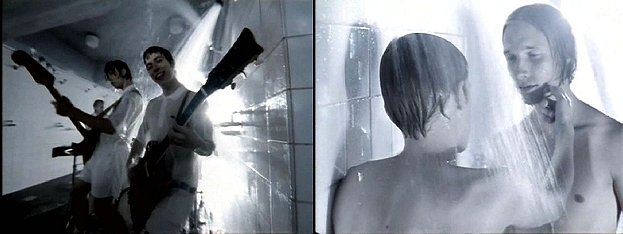
Figure 2: Stills from the Music Video "Sugared"
(Courtesy of Tommy Pietiläinen / Woodpecker Productions)
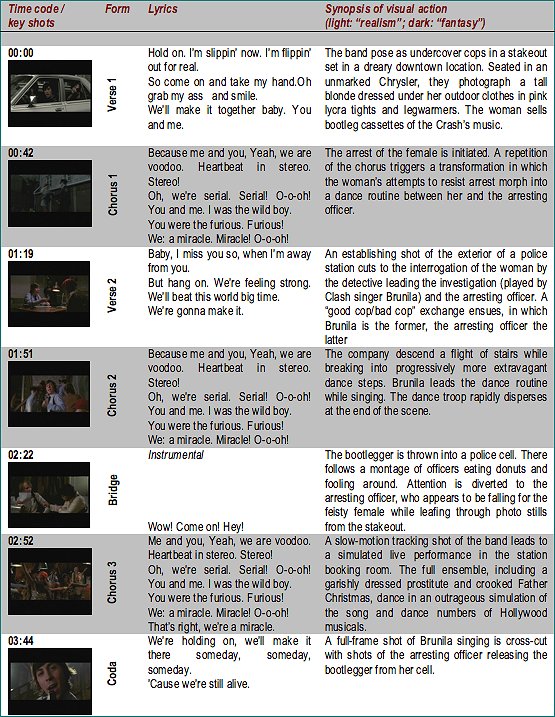
Table 1: "Still Alive" - Form, Lyrics & Synopsis
(Photo Stills Courtesy of Tommy Pietiläinen / Woodpecker Productions)
Audiovisual genealogies
The success of the music video 'Still Alive' has a great deal to do with its director's sensitivity to allusions present already in the musical materials. Undoubtedly, the most striking of these pertains to music from the television series Hill Street Blues: "I had a musical idea, because you know this 'do - do - dooo' in that song (sings cadence from 'Still Alive')? The same thing is in Hill Street Blues." (Pietiläinen 2005) More than a vague invocation of the atmosphere of the series, the music in question is a direct quotation of a key motif from its theme song. Harmonically, the three-step motif is made up of the same jazz-inflected chords (minor and major sevenths). In both cases the chords descend in diatonic steps from the subdominant to the tonic in the Ionian mode. In its new context, the music is transposed down a minor third to the key of C major and is more densely voiced for distorted electric guitar, bass guitar and keyboard. The transposition favours the powerful open C chord onto which the cadence resolves. There is a slight change in rhythm in 'Still Alive': the dotted rhythm of the source is disposed of, the resulting sixteenth-note patterning being more idiomatic to the faster tempo and rock beat of the song. The motif is repeated three times in the original; in 'Still Alive' twice. Repetition is conspicuous in both texts, creating a sense of melodrama, which serves to detach the sequence from its surrounding narrative context. In Hill Street Blues, the repeated motif acts as a kind of "get out clause" in the narrative contract of the title sequence. In early shots, the subdued and reflective mood of the opening music is paraphrased in a visual sequence reflecting the humdrum quality of urban life in the precinct patrolled by the Hill Street Blues cops: a desolate urban landscape draped in rain. With the introduction of the repeated motif, the initial sense of alienation is dispelled by the interpellation of a series of portrait stills of the characters in the series, each of which humanizes the initially inhospitable environment. The warm tones in the musical arrangement at this point underline a possible anti-narrative, intent. In the Crash video, the suspension of narrative sequentiality is effective because the most obvious articulation of the motif is located in the instrumental bridge. Elsewhere in the song, lyrics that coincide with it are effectively isolated from their context both by the rhetorical device of rhythmic foregrounding through repetition and because of the semantic richness of the words as words. (I will return to this important point in the next section.) A similar interruption of the narrative flow of the music is implicated in both examples with similar dramatic consequences. Not coincidentally, the band appear as a band for the first time immediately following the most emphatic iteration of the theme at the end of the bridge. Here the four musicians begin a slow-motion camera-tracked walk to a stage where they will perform the densely arranged final chorus before an elaborately choreographed audience.
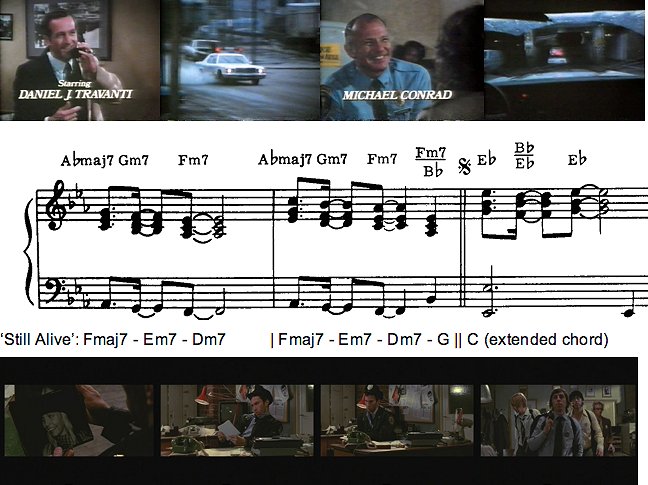
Figure 3: "Hill Street Blues Theme" (Mike Post).
Descending motif followed by A section chordal vamping. In "Still Alive" the music is transposed to the key of C Major. The corresponding visual sequence from the Crash video is below. Note the similarities in lighting, props (photographs, phones), etc.
(Photo Stills Courtesy of Tommy Pietiläinen / Woodpecker Productions)
'Still Alive' would be of little interest if it paraphrased a single source text, which may or may not be recognised by audiences. As in other examples of recent musical multimedia, are the unexpected juxtapositions resulting from a convergence of intertexts. Significantly, the entire sound world of the song is rooted in 1970s and '80s pop, disco, and commercial rock. Vintage synthesizers combine with a classic rock mix (guitar, bass and drums) to produce an unapologetically retro wash of sound. Aside from the Hills Street Blues quotation, the verses of the song feature a form of chordal vamping that was prevalent in disco songs from the late '70s and early '80s. The bluesy, stuck-in-the-mud feel of the first section of Hill Street Blues is replaced here with more upbeat vamping, which instead of descending by a minor second, with the conventional dysphoric implications this musical gesture carries, rises and falls by diatonic steps with each chord change. The faster tempo of the Crash song combined with the emphatic instrumentation and restless to-ing and fro-ing between chordal and neighbouring tones, results in a sense of kinetic energy that has been exploited in a variety of disco and dance movie classics: among them, 'Flashdance ... What a Feeling' and the Pointer Sisters 'I'm So Excited'. Hence, Pietiläinen's decision to make the video a combination between Hill Street Blues and Flashdance is not without musical justification. The chord progression of the verse, which is based on the major-key cycle (C: ||: I - I/VII - vi - V - IV - V -I - V :|| VI maj7 - iii m7 - ii m7 - V), works its way through all of the mandatory stopping points of functional harmony suggesting an unrelenting sense of forward motion within a formal frame of discursive repetition (Middleton 1990, 269) or extended looping. The tonal foundation of the chorus is equally direct (C: I - IV - ii - IV - V). The pleasure taken by the Crash in these simple progressions seems disproportionate if considered from the standpoint of an aesthetic framework privileging unmediated expression and modernist notions of progress. But refusal to buy into the precepts of formalistic musical appreciation diverts the listener towards alternative strategies through which a camp appreciation of the workaday can be recognised. For a discussion of camp banality in the Pet Shop Boys' music, see Hawkins (2001).
To a significant extent, perceptions of music videos are conditioned by audience expectations, concerning the modes of address employed in recent audiovisual media. Of course, intertextuality is never restricted to obvious textual incorporations such as those discussed above, but more significantly extends to encompass a broader field of practices and discursive refractions that define the aesthetic and cultural terrain in which the video operates. It is possible to identify numerous precursors of the discursive strategies employed in the Crash video, a small number of which could be counted as direct influences, while most function in more diffuse and intractable ways. Cross-generic horseplay has occurred in varying degrees at the margins of cultural expression throughout history but it has occupied centre stage in recent performances dubbed postmodern. These are characterised by a parodic relationship to source materials in which areas of dissonant or illuminatingly consonant overlap between incorporated styles draw attention to acts of mediation by those with an authorial stake in performances. On the use of parody in recent artistic production as a critical force, as apposed to Jamesonian "blank pastiche", see Hutcheon (1985) and Dentith (2000). At the same time, the classical linear view of historical antecedence and consequence in creative activity is supplanted by a view distinctive to postmodernism in which "history continually turns on itself" (Hawkins 1999, 43). The resurrection of modes of expression originating in musicals is a highly visible example of this tendency, since outside of the kitschy contexts of the West End and Broadway, the musical was widely held to be an outmoded genre in the 1960s to '80s. Its re-incorporation into the audiovisual mainstream in the past two or three decades is symptomatic of the migration of camp beyond the interpretive communities in which it originates, the spectacular body of the classic song and dance number articulating many of the classic characteristics of camp.[2] More than simple allegiance to an aesthetic that celebrates artifice and obsesses over gay icons, camp enjoyment of musicals points to specific strategies of reception involving the appreciation of irony, aestheticism, theatricality and humour (Babuscio 1999, 118-28). The incorporation of modes of address from musicals in postmodernism can therefore be interpreted as a form of intervention prompting the realignment of stylistic and cultural categories.
Denis Potter most ambitiously staked out the migration of a camp sensibility from musical theatre into more equivocal postmodern aesthetic terrain, traversing "serious" and playful affective modalities, in his landmark television series The Singing Detective (1986). Here the earnestness of a narrative depicting the serious illness of the protagonist strained at the seams as this character sank deeper into a fantasy world of his own creation, a narrative within a narrative, in which characters would launch spontaneously into song in lip-synced performances of scratchy World War II-era songs. The radical nature of this intervention is best considered in relation to the historical context of dance performances in film: while dance numbers resembling those in musicals featured prominently in dance films of the 1970s and '80s (Saturday Night Fever 1977; Fame 1980; Flashdance 1983; Staying Alive 1983; Footloose 1984; Dirty Dancing 1987), these were almost always diegetically justified.
Unadulterated fantasy, such as that found in musicals featuring Fred Astair and Ginger Rogers or Busby Berkeley's lavish "backstage musicals", had played no significant role in audiovisual culture since the 1950s. The gritty realism of Hill Street Blues, with its hand-held cameras, off-screen diegetic noise (giving a documentary feel), naturalistic lighting, complex characters, and open-ended narrative structure, is an index of tastes at the time of its production, which it helped to define. Dance films of the '70s and '80s worked against this new realism only to the extent that life on the dance-floor and the culture of narcissistic and corporeal pleasure that went along with it were offered as an escape from the harsh social conditions of characters' lives (Saturday Night Fever and Fame are prime examples) (Vize 2003, 35). Despite their mainstream appeal, or perhaps partly because of it, these films have been among the most widely disparaged cultural forms of recent years. But this has not prevented their appropriation by minority groups, whose camp appreciation of the pleasures afforded by the films is clearly at odds with dominant modes of consumption. As Vize notes,
[t]he appeal of [Dirty Dancing star] Patrick Swayze's ... rippling muscles is not just to the female audience; nor is John Travolta's ... bedroom routine in Saturday Night Fever, which sees him narcissistically dance in front of the mirror, wearing only underpants, lovingly fondling his clothes, carefully grooming his hair, embracing his medallion - surrounded by such male icons as Al Pacino, Bruce Lee, Sylvester Stallone (and Farah Fawcett). The fact that Saturday Night Fever did not set out to attract a gay audience ... does not detract from the manner in which an ostensibly heterosexual text has been successfully reappropriated. (Ibid., 36-37.)
In this respect, there is some continuity between classic Hollywood musicals of the 1930s to '50s and 1970s dance films: neither met the official culture's criteria for "good taste" and both have been celebrated as being amenable to appropriation by gay audiences. In light of this genealogy, Potter's annexation of musical camp in the context of a "serious" drama, occurring concomitantly with the popularity of dance films, can be seen as a timely cultural intervention, which has not been without influence.
Illuminatingly, Hill Street Blues producer Steven Bochco was quick to realise the potential for creative expansion inherent in Denis Potter's series when devising an experimental fusion of the cop show and the dance drama in the television series Cop Rock (1990). The show, which was regarded by most critics as an unmitigated flop, ran for only half a season and included such elements as "crooning cops, suspect serenades, junkies jammin' and judge and jury jingles" (Plasketes 2004, 65). In terms of direct influence the series is of little import, but some commentators see it as an important stepping-stone towards the integration of music with dramatic action in genres and sui generis instances such as musical dramedies, like Ally McBeal, musical specials in more conventional drama series, like Buffy the Vampire Slayer and Chicago Hope, postmodernist musical extravaganzas, like Baz Lurhman's Moulin Rouge (Plasketes 2004, 65, 73), and independent/art-house offerings like Lars von Trier's musical/melodrama Dancer in the Dark (2000). As Brown (2001) has suggested in a fascinating study of Ally McBeal, modes of expression from musicals and avant-garde artistic production intersect in the US sitcom in a form of appropriation that is recognisably postmodernist. Encapsulating a camp and postmodernist sense of irony, Cop Rock conspicuously prefigures the Crash's video. Pietiläinen was not aware of this series when making 'Still Alive' (Pietiläinen 2005), but this is of little consequence. The glitzy spectacle of musicals was very much in the air in the years preceding the making 'Still Alive'; not inconsequentially in the genre we are discussing: the music video.
Hill Street Blues aside, undoubtedly the most conspicuous intertext for many viewers, which certainly informed Pietiäinen's conception of his video (Pietiläinen 2005), is Spike Jonze's highly acclaimed video for Björk's 'It's Oh So Quiet', which is analysed in some detail by Hawkins (1999). Like 'Still Alive', this video is divided into two sections representing "reality" and "fantasy". The initial section is filmed in slow motion and shows the Icelandic singer ambling through a shopping centre in California's San Fernando Valley. Aside from the dreamlike quality of the slow motion imagery and the fact that Björk is singing, the background action resembles a stark version of everyday life. In the song's chorus, however, a significant transformation occurs in musical arrangement, dramatic setting and cinematography. Notably, innovations in filming technique allowed Jonze and his collaborators to sync a vintage audio player with a new type of camera which featured a shutter whose speed could be adjusted in real time. This allowed the slow motion sequences of the song's verses to segue imperceptibly into the big band choruses, which were filmed at normal speed (Lewman 2003). In the latter, any pretence of realism is jettisoned as the extras on the set become the cast of an elaborate dance routine, complete with such unlikely characters as the Tin Man from Wizard of Oz, a dancing mailbox, and spinning umbrella's filmed from above, the last of which borrows self-consciously from Busby Berkeley musicals and the classic French musical Les Parapluies de Cherbourg (1964). Transitions between a dream-like reality and a fantasy world that, paradoxically, is more realistic than the video's "real" (being filmed in real time), are negotiated by means of the technique Rick Altman calls "video dissolve" (Altman 1989, 74). Altman makes the following important distinction between visual and video dissolve:
In ... visual dissolve ... two distinct images are made to seem continuous through superimposition. In the following discussion, however, the notion of "video dissolve" will apply in a somewhat broader fashion to any visual device bridging two separate places, times, or levels of reality. In particular, I will show how these visual devices are used to connect diegetic space of a realistic nature to idealized space-diegetic or not-which represents its diametric opposite". (Altman 1989, 74.)
In this technique, which was a staple of "Golden Age" Hollywood musicals, the inherent rhythms of ordinary movements and dialogue are picked up on and transformed imperceptibly into more stylised gestures, which eventually fall into line with the rhythms of the accompanying music. The transition from everyday reality to fantasy is thus negotiated incrementally, which allows some sense of narrative continuity to be sustained even in the light of a series of implausible interruptions.
In 'Still Alive', transitions between verses and choruses are similarly negotiated. The first video dissolve takes place during the fight scene at the beginning of the video, half way through the first chorus. The female bootlegger attempts to flee but is grabbed by the dark-haired male cop, whose uniformed attire is an obvious signifier of camp (as a point of reference, think George Michael in 'Outside'). As he pulls her back, she responds to the rhythmic drive of the chorus in a series of spins that are closely synced with the accompanying music. The transition in genre is indicated also in the cinematography, in which the handheld cameras of Hill Street Blues are exchanged for Busby Berkeley-styled high-angle shots as the sparring couple revolves in a series of gestures that are ambiguously coded as dance and fight moves. At the end of the chorus a slow flip wipe (a dated technique) from right to left effectively smudges out the excesses of the initial musical section. Unlike musicals, audio dissolve is not as significant a factor in music videos since characters generally sing throughout performances. In this respect, the reality portrayed is always supradiegetic, although one of the key markers of this category, that of dance, is not present throughout the perfomance. Viewed from a more relativistic perspective, however, one could say that the visual track portrays diegetic reality in the verses of both 'It's Oh So Quiet' and 'Still Alive', while the choruses represent supradiegetic fantasy as indicated by dance. This interpretation is sustained by the presence of diegetic noises in the first verse of the Crash song, including a police siren and noises from a radio.
In the second video dissolve, the main protagonists descend a flight of stairs, initially in partial or "accidental" synchronisation. The party locks abruptly into step concomitantly with the rhythmically accented phrase "we're voodoo", after which they link up in a series of camped up dance gestures. Brunila, standing at the centre of the ensemble, is engulfed in a flurry of movement, which he responds to in kind with musically synced arm gestures and mincing dance steps, all of which is executed with a twinkle in the eye and knowing smirk. The singer's cheeky grin as he delivers the line "I was the wild boy" leaves plenty to the imagination, while his tightly synced physical gestures and apparent rapport with the camera inscribe the illusion of a seasoned song-and-dance front-man. I say illusion because much credit for the effectiveness of this sequence should go to Pietiläinen, whose rapid edits (no fewer than 30 cuts in 30 seconds: from 02:00 to 02.30) provide a sense of rhythmic volition that choreography alone could not achieve. The last repeated line of the chorus ("miracle, miracle"), prompts the rapid dispersal of the company in preparation for the following scene.

Figure 4: Video Dissolve in 3 Choruses of "Still Alive":
Arrest Sequence (00:01:04); Stairs (00:02:03); Booking Room "Live" Performance (00:03:15).
The final dissolve follows a slow motion tracking shot of the band-an effective means of building up libidinal energy. The contrast between the slow motion sequence and the highly animated dance sequence that follows is striking and, when combined with the traditional function of the bridge in popular song, engenders a desire for change, in the auditory form of resolution to the verse/chorus dyad and the visual form of real-time cinematography. Moreover, the linear reverse-action of the camera, when contrasted with the static and cyclical actions of previous shots, suggests-- in this case sexually charged-movement towards a goal that is arrived with a tongue-in-check display of audiovisual fireworks. The contrast of slow-motion and real-time sections here is undoubtedly indebted to Jonze and Björk's 'It's Oh So Quiet', but produces different meanings in this context. Low-angle shots (chest height) of the band walking in slow-motion accompany retro-synth horn hits to produce a sense of mock-heroism that has long been favoured in parodic forms, and which "carries within itself ... an implicit recognition of the unsustainability of undiluted heroics in the contemporary world" (Dentith 2000, 109). Heroic masculinity is similarly communicated in the Dressman advertisements currently running on Finnish television. In this case, however, an even lower camera angle (hip height), back-slapping bonding gestures and an ecstatic female vocalise leave little double that the intention is to cast the male models as sexually potent (even the older man provocatively included in the ensemble). In 'Still Alive', the presence of repeated triplet figures played on a vintage synth brings to mind Van Halen's 'Jump'. Here Dave Lee Roth's strutting masculinity finds a counterpart in the gritty maleness of the police drama in a performative blend that cannot fail to draw attention to its own artifice. For more on constructions of sexuality in heavy metal, see Walser (1993) and Fast (2001).
Encouraged by Brunila's singing ("Wow! Come on! Hey!"), the ensemble, including camp cops (with at least one female in male drag), a crooked Santa, and a prostitute in sequins and feathers, musters in the station booking room for the final choruses of the song. Again the company falls magically into step at the beginning of the chorus, their action resembling the frenetic motion of whirling dervishes. As if there were any doubt that this is a mock performance, the build up to this transition is marked by a resounding open D minor chord that is visually reinforced by guitarist Brunila and bassist Samuli Haataja swinging their arms in a synchronised "windmill" gesture. Combining cock rock with mock rock the next shot emphasises the theme of symbolic power as the heavily ironic tracking shot comes to a head with a close up of the material symbols of the cop's power: their badges (highly fetishized symbols of phallic power in the context of US cop dramas). The miracle of musical fantasy once again evaporates, as if on cue, with the repetition of the word "miracle".
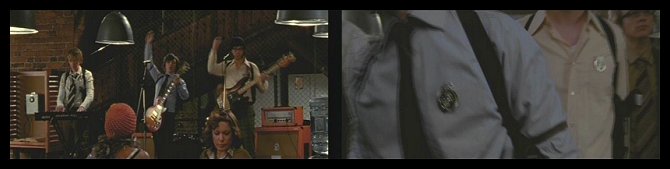
Figure 5: A Resounding Open D minor Chord Visually Reinforced with "Windmill" Swings, Followed by a Close-up of the Cops' Badges (Fetishised Symbols of Phallic Power in the Context of U.S. Cop Dramas).
Technologies: sounds, words, images
Technology is bound up with the modes of expression at work in the music video on several interwoven levels. The music echoes past musical soundscapes not only through appropriations on the level of "the notes", but first and foremost in the use of sounds. The brassy and brazen sounds of a vintage Prophet 600 synthesiser hooked up to a Roland Juno 106, the "warm tone" of Orange valve amps, the recognisable sounds of classic guitar brands (a Gibson Les Paul guitar and Fender Precision bass), Brunila's vintage Neumann U47 microphone, and production techniques and musical arrangements rooted in analogue technologies conspire with other musical parameters to produce affects that although invoking the past are not of their essence nostalgic. To be sure, these references draw attention to the inadequacy of notions of teleological progress as the primary criteria in aesthetic evaluations. But more than that, they are allied to a sense of fun that encourages the listener to reassess sensory and social priorities in the present. This same sense of fun is articulated also in the lyrics, particularly in the lines "Heartbeat in stereo. Stereo! Oh, we're serial. Serial!" Here retro technologies provide humorous analogues to interpersonal sentiments, thus imparting a sense of distance that forecloses interpretations of the song as a straightforward romantic confession, in favour of the artifice and analogue of play. In the age of digital surround sound and subwoofers (in a sense, communal technologies), "stereo" has to it a romantic resonance that is only enhanced by the knowledge that this technology is inextricably rooted in the past. Utopian claims of "high fidelity" and "perfect sound reproduction" that were voiced in the heyday of "the stereo revolution" have not been forgotten, but rub ironically against contemporary discourses, which there seems little doubt will in retrospect seem equally quaint and faded. The historical specificity of notions of high-fidelity is engagingly taken up in Sterne (2003). This perspective and the appreciation that goes with it belong steadfastly to the realm of camp. The word "serial" further extends the interest in technologies to IT, and reminds listeners that computers were once considered "high-tech". The serial ports of computers are an "obsolete" technology that forcefully brings this point home. A further connotation of "serial" relates to TV serials, and is buttressed through allusions to a specific serial: Hill Street Blues. Both the binary complementarity of romantic love ("we are stereo") and the one-at-a-time simplicity of serialism (serial monogamy?) hark back to something simple and reassuringly banal that the song beseeches the listener to contemplate. If one extends this concept to encompass musical "serialism"-a "technology" of musical composition that in its early forms required the composer to work through musical materials one at a time-it is not hard to perceive Brunila as poking fun at the cultural logic of modernism. This same take on technology is mirrored in the visuals: both the props on the set-including typewriters, antiquated telephones, and c-cassettes-and the cinematic techniques utilized by Pietiläinen (aerial shots, flip-wipes etc.), reinforce the sense of a dialogical engagement with past technologies.
Synchronisations - of word, images, and music
The common assumption that pop consumers consult videos in order to find out what the words mean should not go uninterrogated (Frith 1996, 159). It does, however, seem clear that the combination of words, images, and music in videos serves to fix connotations in a way that would not happen in the absence of such a union. While some such associations are relatively difficult to quantify and relate to diffuse concepts such as "star persona" and "image", others are more easy to pinpoint. Examples of how specific words are singled out for contemplation by means of the attention they receive in another medium are not difficult to locate in 'Still Alive'. As the previous section indicates, Brunila's technique of lyric writing privileges the rhetorical and connotative value of individual words and phrases over linear relations to a surrounding narrative. Words are chosen because they sound good and because they resonate with the attitude and aesthetic of the song and not because they tell a coherent story. Frith (1996, 158-82) makes the compelling point that this is true of pop lyrics in general, although the evidence of certain pop lyricists (in the Finnish context, Juice Leskinen, Hector, and Maija Vilkkumaa) calls for more in the way of qualification than his argument would seem to allow.
In Brunila's case, it is certainly true that an emphasis on "double meanings, indirection, puns, on symbolism, and the surrealism of language organized as sound" (Frith 1996, 172) arises as a result of the singer's relative neglect of narrative considerations. Brunila's use of language (be it English or, in 'Lauren Caught My Eye', French) invariably privileges style over narrative content. For a non-native speaker this is a shrewd strategy: words like "stereo", "serial", "love" and "jeans" are as much a part of global culture as they are a part of their source language. The aphorism "stick to what you know" comes to mind. Intriguingly, the music of 'Still Alive' works hard to reinforce this mode of perception, teasing the words away from their embeddedness in a narrative continuum. Notably, words from the chorus which function as hooks-like "serious", "serial", "furious", and "miracle" (note the alliteration of "serious"/"serial" and rhyming of "serial"/"miracle" and "serious/furious")-appear not once but twice in succession in the context of a tri-syllabic descending diatonic line derived from the Hill Street Blues quotation. This rhetorical device already singles the words out, and Pietiläinen's audiovisual treatment homes in on these moments at anchor points in the video's narrative construction. In the first chorus the word "furious" coincides with the fight scene between the female bootlegger and the arresting officer, the first iteration syncing up exactly with a karate kick by the woman, the second with a close up of Brunila uttering the word with an expression of grim determination tempered with admiration. The word "miracle" coincides with a breathtaking throw by the male officer, after which the wayward female lands miraculously in his lap. As in all of the instances of this word, the magic of video dissolve dissipates abruptly with this cue. In the second chorus, these lines are reinforced through the spectacle of Brunila and his dance troupe's performance on the stairwell. Dancers glance from side to side with each utterance of "stereo" ("ste" -face left - "re" - swish to right - o - face right). The word "serial" finds Brunila pointing first left then right on its first iteration, while its repeat prompts the dancers to descend the stairs one-by-one in rhythmically accented steps. Other "illustrated" words include "you and me" which has Brunila pointing toward the camera and then himself; "heartbeat," accented with a punching fist, towards the chest then the camera; and "wild boy", which evinces a cheeky smile from Brunila and thrown back head gesture from the dancers. In the last chorus, the relationship between words and visual gestures is far less illustrative, the exuberant rhetoric of dance and "live" performance taking over from these more formalised early instances. A possible exception is the word "stereo", which is illustrated with a "windmill" arm-swing by the dancers in imitation of a gesture performed by the guitarists a few seconds earlier.
The relationship between lyrics and images is far looser in the verses. In the second verse, a lyric expressing romantic love and melancholy ("Baby, I miss you so, when I'm away from you. But hang on. We're feeling strong. We'll beat this world big time. We're gonna make it") is in no way reflected in Brunila's acting. Over these lines he interrogates the arrested blonde with body language that implies frustration and anger. The line "big time" in this context stands out more as an expression of the detective's position of power than the sense implied by the continuity of the lyrics. Through clever editing, the romantic subtext of the verse is mapped onto the arresting officer/bootlegger pair in a scenario that evokes a classic good cop/bad cop exchange. Intriguingly, the romantic aspect of the lyrics speaks as much to the male camaraderie of officers/band members as it does to the relationship between the central romantic coupling. The first-verse stakeout is particularly illuminating in this respect, as is the potently narcissistic pleasure implied by the mock-heroic instrumental break and the ensuing slow motion tracking shot of the band members. The constructed "intimacy" of the coda is also illuminating. Here it becomes apparent that Brunila (as singer as well as cop) is a sympathetic but largely disinterested party when it comes to the romantic subtext of the song. His performance in close up suggests a mode of self-involvement through "direct address" (of an audience he cannot see!) that is largely anachronistic in style, harking back to the staged sincerity of crooners like Nat "King" Cole. It is necessary to turn to questions of camp expression and its influence in recent pop in order to make better sense of the affective implications of this sequence.
Camp connotations and the male voice
As we have seen, no single audiovisual signifier is responsible for encoding 'Still Alive' as a strongly ironic performance that employs modes of address that are likely to be understood as camp. The combination of an extravagant musical spectacle with elements from 1970s dance films, policemen in uniforms (with fetish accessories like caps, badges, handcuffs and gun straps), some of whom are women, and lyrics that implore the listener to "grab [the singer's] arse, and smile", are not enough. These sentiments coalesce, they are given direction and motivation, through the primary signifier of subjectivity in popular music: the singing voice. Much has been written on the ideological and subjective implications of the voice in past few years, a sizeable slice of which overlaps with issues of interest in gay, lesbian and queer studies of music (Cusick 1999; Hawkins & Richardson 2006; Koestenbaum 1994; Lewin 1992; Poizat 1992; Potter 1998; Richardson 1999, 137-57; Välimäki 2005, 301-37; Wood 1994).
Considerably less has been written on the male camp voice. Early work in this area focused on the more abstract sense of the word "voice" (the "voice" of a social group) and drew attention to the visibility of openly gay singers operating in the British pop mainstream, including the singer Jimmy Summerville (Attig 1991). More recent work in musicology approaches the question from the broader perspective of queer studies and more specifically addresses the corporeality of the singing act as well issues of gender politics, spectatorship and performativity. Stan Hawkins' work on singers like Morrisey, Prince and Neil Tennant (Pet Shop Boys) stands out in this regard (Hawkins 2001). Of the above, Tennant offers the most fruitful point of reference when discussing Brunila's distinctive singing style, which while it echoes the vernacular drawl of britpop singers like Damon Albarn (Blur, Gorillaz), the Gallagher brothers (Oasis) and Richard Ashcroft (Verve), is more closely aligned with Tennant's style and others who have adopted an affected boy-camp style, such as Pete Shelley (Buzzcocks), Mark Almond (Soft Cell), and Boy George. It is notoriously difficult to quantify what it is that marks a male voice as camp; this is ultimately in the ear of the beholder. A tentative taxonomy, however, might include but not be restricted to such features as: (i) lisping; (ii) hypercorrect articulation (in English, RP or the Queen's English); (iii) affected vocal production brought about by, e.g., pursing of the lips, contraction of tongue against the palette, nasality; (iv) flamboyant styles that emphasise style over substance, such as those featuring falsetto, excessive vibrato, or portamento; (v) the relishing or exaggeration of musical banalities and clichés; (vi) nasality; (vii) technological manipulation of the voice (e.g., with vocoders); (viii) ostentatious theatricality: (ix) the adoption of a saccharine sweet, "innocent", or androgynous tone. In compiling such as list of attributes, it is important to recognize that a voice's connotative field is made up as much by what it is not as by what it is. The authentic rasp of rock or soul singers like Springsteen or Michael McDonald is definitely not camp, while Tom Waits' excessive use of rough hues borders on camp in its ironic intent. Trained "chest" voices and are not camp unless an element of theatricality in voice production points in this direction, as is does with Freddy Mercury and Rufus Wainwright. The falsetto styles of Prince, Jimmy Summerville, the Darkness's Justin Hawkins, the Scissor Sisters' Jake Shears, Sigur Rós's Jónsi Birgisson and (unintentionally, perhaps) the Bee Gees are all camp, but that of Coldplay singer Chris Martin is not. The importance of context cannot be overstated. What is sung, what it looks like, and what we know about the performer matters as much as singing style. Moreover, a non-essentialising view on voice production demands that the camp voice be not equated directly with the gay voice.
Brunila's vocal style resists the authenticity of the loud projected voice. It has to it a lyrical sweetness and a humorous appreciation of stylistic affectation (for instance, the Buddy Holly-styled o-o-ohs of the chorus), that position it squarely-perhaps queerly-at the centre of a camp aesthetic. It is above all a humane voice, which encapsulates a sense of wonder and reverie. Moreover, its androgynous quality opens up performances to processes of identification that occur in the spaces between essential categories.
"We'll beat this world big time": revisionist voices in Finnish popular music
It is important to qualify the above reflections by recognising the diversity of the Crash's audience. Forum discussions on crash.com and the unofficial fan site sugared.org show that the band has a sizeable and active female following. This is not surprising considering the non-gender-specific nature of many of Brunila's lyrics and the androgynous nature of the music videos' imagery. In other words, the Crash's songs-like those of Prince and numerous British acts, including the Buzzcocks, Morrisey, and Suede-encourage female identification with the singer more than they position females as somehow external to the singer's interior world. Obviously, this has a certain appeal that opens the interpretative field beyond what is usual. I wrote at the beginning of this article that the Crash's music seems designed to attract allegiances across boundaries and this is reflected in an almost cultic following in several countries around the world. It is impossible to circumscribe their fan base in a clear-cut way. Discussion threads addressing the musical tastes of Crash fans-such as the thread "introducing ourselves" on the unofficial fansite sugared.org (accessed 14.3.2006)-do, however, reveal some degree of consensus. "Alternative" or "indie" acts feature prominently (like the Cure, Depeche Mode, Björk, Flaming Lips, Scissor Sistors, and Sigur Rós), as do obvious musical influences (the Pet Shop Boys and Bowie), and bands associated with the Britpop movement (Blur, Suede, Pulp, Radiohead and Travis). Finnish bands working in a similar vein (like Daisy, Since November and Lemonator) are mentioned by several contributors, as are female singer/songwriters in Finland (like Maija Vilkkumaa and Jonna Tervamaa). It is evident from many comments that followers of the band-both male and female-identify strongly with the musicians, particular Teemu Brunila. Some fans (usually females) express attraction towards the singer, although stereotypical forms of "fandom", involving romantic fantasies and "idol worship", appear to be rare. More typical are comments that invoke the "feel-good factor" of the music, particularly in live performances: the band put listeners in a good mood, make them smile, have a cool intelligence, they charm and caress audiences emotionally. In light of many of the observations made above concerning camp strategies, it should be noted that a significant proportion of acts named by Crash fans as favourites have been identified in criticism and academic writing as sexually ambiguous or androgynous, and in several cases performers are openly homosexual. Such materials provide limited evidence, of course, concerning the reception of the band or the sexual identities of audience members. But it is hardly surprising, in light of the evidence presented in the course of my analysis, that listeners should have such tastes. I will not attempt to "resolve" the ambiguities of the Crash's audiovisual performances in my discussion, although I am aware that there are writers who disapprove of sexual ambiguity in pop that is not aligned with openly expressed homosexuality (such as Gill 1995), a position that is difficult to sustain in the light of recent queer theory. As Geyrhalter perceptively remarks, "everybody can be queer, as long as sexual conformity is challenged. Queer, in fact, is much more about confusion and subversion on all available levels than about having an explicit, fixed sexual identity" (Geyrhalter 1996, 223-23). In this light, what the Crash say, and more importantly what they perform, in relation to these issues may well be more important than what they leave unsaid.
It has been noted above that the Crash's approach is indicative of a broader shift in discursive practices in Finnish popular culture. Nowhere is this more evident than in recent television advertising. In two advertisements for the Finnish telecommunications company Elisa, two uniformed employees of Elisa feature prominently. Both are laconic, middle-aged Finnish males-down to earth types, perhaps from a rural area, who take unexpected events in their stride. Quite often, these events comment upon recent cultural transformations in Finnish society: from rural to urban culture, from pre-industrial to electronic modes of production, and from homogenous to heterogeneous cultural formations. Emblematic of "the new Finland," the two show no outward signs of surprise when they encounter a group of Japanese tourists while rowing on an otherwise deserted lake somewhere in the heart of rural Finland. The tourists are greeted with courtesy and the group discusses Elisa mobile phone connections before parting company. The obvious implication is that Elisa workers go out of their way to service customers, and-unlike earlier generations, perhaps-they refuse to distinguish between customers on the basis of race or nationality. Nevertheless, the presence of the Japanese tourists fishing in the Finnish heartland is viewed from the implied spectator's point of view, and his or her preconceptions of Finnishness, as strongly ironic. A similar construction of "the new Finland" is found in a more recent advertisement. This time the workers knock on the apartment door of a female customer. The woman opens the door, after which audio and video dissolve occurs and the apartment is magically transformed into the set of a musical. An extravagant song and dance number ensues, to which the Elisa workers-possibly the most unlikely musical actors one is likely to encounter-respond with camp arm gestures and song. A clearer deconstruction of traditional Finnish masculinity is difficult to envisage. The advertisement was aired in the months immediately following the success of the Crash's music video. As was another advertisement, for the Facility Service Group ISS. This advertisement depicts employees of another service-orientated organisation assembled in a situation closely resembling the Hill Street Blues roll call. In Hill Street Blues, this scene would usually culminate with the catchphrase 'And, hey-let's be careful out there', or, following the death of actor Michael Conrad (who played Sgt. Phil Esterhaus), 'Let's do it to them before they do it to you'. These phrases would cue the beginning of the title sequence. In the ISS ad, the roll call ends with a similar catchphrase, "Hei, hei-työn iloa!" (Hey, hey-enjoy your work!), which triggers a musical cue that strongly resembles the Hill Street Blues theme. The above scene cuts to a shot of cars emerging from the company garage, which wind their way through Helsinki's rain-soaked streets in a montage that is clearly derivative of the opening credits of the US cop show.
Hardly coincidental, the above examples arguably reveal more than any straightforward influences, the "camping up" and domestication of existing audiovisual materials in instances that constitute a departure from traditional audiovisual practices in Finland, something that is without question politically marked. It is tempting therefore to view the Crash as part of a broader revisionist project in which issues of gender, location, and other facets of identity are renegotiated with reference to an expanded palette of cultural touchstones. A comment that came up after a recent conference presentation of this work concerned the extent to which it is defensible to classify the Crash's audiovisual performances as "Finnish". In an obvious way, it is easy to understand the point of view expressed in this question: Brunila sings mostly in English and the music betrays a strong sense of affiliation with precursors from the British indie scene. Furthermore, in interviews the singer himself has characterised the band as "unFinnish," their main market potential lying elsewhere (Tuomi-Nikula 2005).[3] But to accept this position, or to focus solely on foreign market potential, is to overlook the popularity of the band in Finland, their significant impact on Finnish audiovisual culture, and traces of local identity that, intentionally or not, are encoded within their music and corresponding visual representations. It is also to disregard the significant cultural transformations in Finland discussed in the introduction. There are other relevant factors. Undoubtedly, education has played a significant part in opening up the Finnish cultural field: popular styles figure prominently these days in music education in Finland, from the early years of schooling to higher education in pop/jazz conservatories. Furthermore, in the age of the internet and other electronic media young people are exposed to a diversity of codes from a very early age. The sum of all the above is a pool of competent young musicians who possess the requisite cultural capital to participate in a range of cultural practices-both domestic and domesticated-which may formerly have been regarded as "out of bounds."
Notes
[1] At the time of writing, the video can be viewed online at the website of the production company that made it: http://www.woodpeckerfilm.fi/tommipietilainenb3.html. This and the other Crash videos discussed in the article are available on a special DVD edition of the compilation album The Crash: Selected Songs: 1999-2005. The album can be purchased at the following URLs: http://www.stupido.fi/shop/catalog.php?lang=eng&action=search&keywords=selected+songs and http://www.cdon.com. For further details and updates, consult the official Crash website: http://www.thecrash.com.
[2] The association of camp with musicals has been addressed by a number of scholars (Cohan 2002, 103-06; Dyer 2002; Robertson 1996; Tinkcom 1996).
[3] "Me tehdään niin epäsuomalaista musiikkia, että meidän markkinat ovat pikemminkin muualla kuin täällä. Siitä huolimatta että meillä on mennyt tosi hyvin Suomessa.
References
Altman, Rick. 1989. The American Film Musical. London: British Film Institute.
Attig, R. Brian. 1991. "The Gay Voice in Popular Music: a social value model analysis of 'Don't Leave Me This Way'." Journal of Homosexuality 21/1: 185-202.
Babuscio, Jack 1999. "The Cinema of Camp (AKA Camp and the Gay Sensibility)." In Camp: Queer Aesthetics and the Performing Subject: A Reader, edited by F. Cleto. Edinburgh: Edinburgh University Press.
Barkin, E., L. Hamessley, & B. Boretz, eds. 1999. Audible Traces: gender, identity, and music. Zurich, Los Angeles: Carciofoli Verlagshaus.
Brett, P., E. Wood, & G. Thomas, eds. 1994. Queering the Pitch: the new gay and lesbian musicology. New York & London: Routledge.
Brown, Julie. 2001. "Ally McBeal's Postmodern Soundtrack." Journal of the Royal Musical Association 126/2: 275-303.
Case, S., P. Brett, & S.L. Foster, eds. 1995. Cruising the Performative: Interventions into the representation of ethnicity, nationality, and sexuality, Unnatural acts. Bloomington: Indiana University Press.
Cheetham, Paul. Crash Bio [website] 2005 [cited 6.10.2005. Available from http://www.thecrash.com.
Cleto, Fabio. 1999. "Introduction: queering the camp." In Camp: queer aesthetics and the performing subject: a reader. Edinburgh: Edinburgh University Press.
Cohan, Steven, ed. 2002. The Hollywood Musicals: the film reader. New York & London: Routledge.
Cusick, Suzanne G. 1999. "On Musical Performances of Gender and Sex." In Audible Traces: gender, identity, and music, edited by E. Barkin, L. Hamessley and B. Boretz. Zurich, Los Angeles: Carciofoli Verlagshaus.
Dentith, Simon. 2000. Parody, The new critical idiom. London: Routledge.
Dyer, Richard. 1999. "It's Being So Camp as Keeps Us Going." In Camp: queer aesthetics and the performing subject: a reader, edited by F. Cleto. Edinburgh: Edinburgh University Press.
---. 2002. "Judy Garland and Camp." In The Hollywood Musicals: the film reader, edited by S. Cohan. New York & London: Routledge.
Fast, Susan. 2001. In the Houses of the Holy: Led Zeppelin and the power of rock music. Oxford: Oxford University Press.
Frith, Simon. 1996. Performing Rites: evaluating popular music. Oxford: Oxford University Press.
Frith, Simon, & Angela McRobbie. 1990. "Rock and Sexuality." In On record: rock, pop, and the written word. London & New York: Routledge.
Geertz, Clifford. 1973. The Interpretation of Cultures: selected essays. New York: Basic Books.
Geyrhalter, Thomas. 1996. "Effeminacy, Camp and Sexual Subversion in Rock: the Cure and Suede." In Popular Music 15/2: 217-24.
Gill, John. 1995. Queer Noises: male and female homosexuality in twentieth century music. Minneapolis: University of Minnesota Press.
Hawkins, Stan. 1999. "Musical Excess and Postmodern Identity in Björk's 'It's Oh So Quiet." In Musiikin Suunta 2: 43-54.
---. 2001. Settling the Pop Score: pop texts and identity politics. Aldershot: Ashgate.
Hawkins, Stan, & John Richardson. 2006. "Remodelling Britney: matters of intoxication and mediation." In Popular Music and Society. Forthcoming.
Hutcheon, Linda. 1985. A Theory of Parody: the teachings of twentieth-century art forms. New York & London: Methuen.
Joko homo-/lesboparit ovat arkipäiväisiä? 2005. [chat group]. Treseta, 18.12.2004 2005 [cited 6.10.2005 2005]. http://www.treseta.com/forum/viewtopic.php?p=21936&sid=0dfa498b0ca1986d20c1900ddb1a0102.
Juvonen, Tuula. 2002. Varjoelämää ja julkisia salaisuuksia. Jyväskylä: Vastapaino.
Koestenbaum, Wayne. 1994. The Queen's Throat: opera, homosexuality and the mystery of desire. London: Penguin.
Lewin, David. 1992. "Women's Voices and the Fundamental Bass." In The Journal of Musicology 10/4: 464-83.
Lewman, Mark. 2003. Spike Jonze interview in The Work of Spike Jonze. DVD. Vital.
Löfström, Jan. 1998. "Introduction: sketching the framework for a history and sociology of homosexualities in the Nordic countries." In Scandinavian Homosexualities: essays on gay and lesbian studies, edited by J. Löfström. New York & London: Harrington Park Press.
---. 1999. Sukupuoliero agraarikulttuurissa. "Se nyt vaan on semmonen". Vol. 757, Suomalaisen Kirjallisuuden Seuran toimituksia. Helsinki: SKS.
Middleton, Richard. 1990. Studying Popular Music. Milton Keynes: Open University Press.
Pietiläinen, Tommi. 2005. Interview with the author. Helsinki, 2.4.2005.
Plasketes, George. 2004. "Cop Rock Revisited: unsung series and musical hinge in cross-genre evolution." In Journal of Popular Film and Television 32/2: 64-73.
Poizat, Michel. 1992. The Angel's Cry: beyond the pleasure principle in opera. Ithaca & London: Cornell University Press.
Potter, John. 1998. Vocal Authority: singing style and ideology. New York: Cambridge University Press.
Realismia kotikadulle? 2005. [online chat room]. Yle 1, 16.2.2005 2005 [cited 6.10.2005]. http://chat.yle.fi/tv1/ubb/Forum30/HTML/000011.html.
Richardson, John. 1999. Singing Archaeology: Philip Glass's Akhnaten, Music/culture. Hanover, NH: University Press of New England & Wesleyan University Press.
Robertson, Pamela. 1996. Guilty Pleasures: feminist camp from Mae West to Madonna. Durham: Duke University Press.
Sedgwick, Eve Kosofsky. 1994. Epistemology of the Closet. London: Penguin.
Seksuaalinen poikkeavuus in. 2005. [keskustelufoorumi]. Kustannusosakeyhtiö Iltalehti, 14.7.2005 2005 [cited 6.10.2005 2005]. Available from http://mobiili.iltalehti.fi/osastot/keskustelu/thread.jspa?threadID=7928&messageID=134068.
Smith, Richard. 1995. Seduced and Abandoned: essays on gay men and popular music. London: Cassell.
Solie, Ruth A., ed. 1993. Musicology and Difference: gender and sexuality in music scholarship. Berkeley & London: University of California Press.
Sontag, Susan. 1999. "Notes on 'Camp'." In Camp: queer aesthetics and the performing subject: a reader, edited by F. Cleto. Edinburgh: Edinburgh University Press.
Sterne, Jonathan. 2003. The Audible Past: cultural origins of sound reproduction. Durham: Duke University Press.
Tinkcom, Matthew. 1996. "'Working like a Homosexual': camp visual codes and the labor of gay subjects in the MGM Freed unit." Cinema Journal 35/2: 24-42.
Titon, Jeff Todd. 2003. "Textual Analysis or Thick Description?" In The cultural study of music: a critical introduction, edited by M. Clayton, T. Herbert & R. Middleton. New York: Routledge.
Tuomi-Nikula, Tuomas. 2005. Ura pakettiin ja katse tiukasti ulkomaille. Lapin kansa, Friday 23.12.2005, 11.
Välimäki, Susanna. 2005. Subject Strategies in Music: a psychoanalytic approach to musical signification, Acta semiotica Fennica XXII. Imatra [Helsinki]: International Semiotics Institute/ Semiotic Society of Finland.
Vize, Lesley. 2003. "Music and the Body in Dance Film." In Popular music and film, edited by I. Inglis. London & New York: Wallflower.
Walser, Robert. 1993. Running with the Devil: power, gender, and madness in heavy metal music. Hanover, NH: University Press of New England.
Whiteley, Sheila. 1997. Sexing the Groove: popular music and gender. London & New York: Routledge.
Wood, Elizabeth. 1994. "Sapphonics." In Brett, P., E. Wood, and G. Thomas, eds. Queering the Pitch: the new gay and lesbian musicology. New York & London: Routledge.
Videography
The Crash. 1999. Sugared. Dir. T. Pietiläinen. Woodpecker Film/Warner Music.
The Crash. 2001. Lauren Caught My Eye. Dir. T. Pietiläinen. Woodpecker Film/Warner Music.
The Crash. 2002. Star. Dir. T. Pietiläinen. Woodpecker Film/Warner Music.
The Crash. 2003. Still Alive. Dir. T. Pietiläinen. Woodpecker Film/Warner Music.